
Building Intelligent Growth
Building Intelligent Growth in today’s market is no longer about doing more marketing it is about building smarter systems. Many organizations invest heavily in campaigns, digital tools, and customer acquisition efforts, yet struggle to convert that activity into sustainable revenue. The difference lies in alignment. Digital transformation provides infrastructure for insight. Smart segmentation creates strategic focus. Customer journey strategy ensures coordinated execution. When these three elements operate together, businesses move from reactive marketing to intelligent growth, growth that is scalable, measurable, and performance driven.
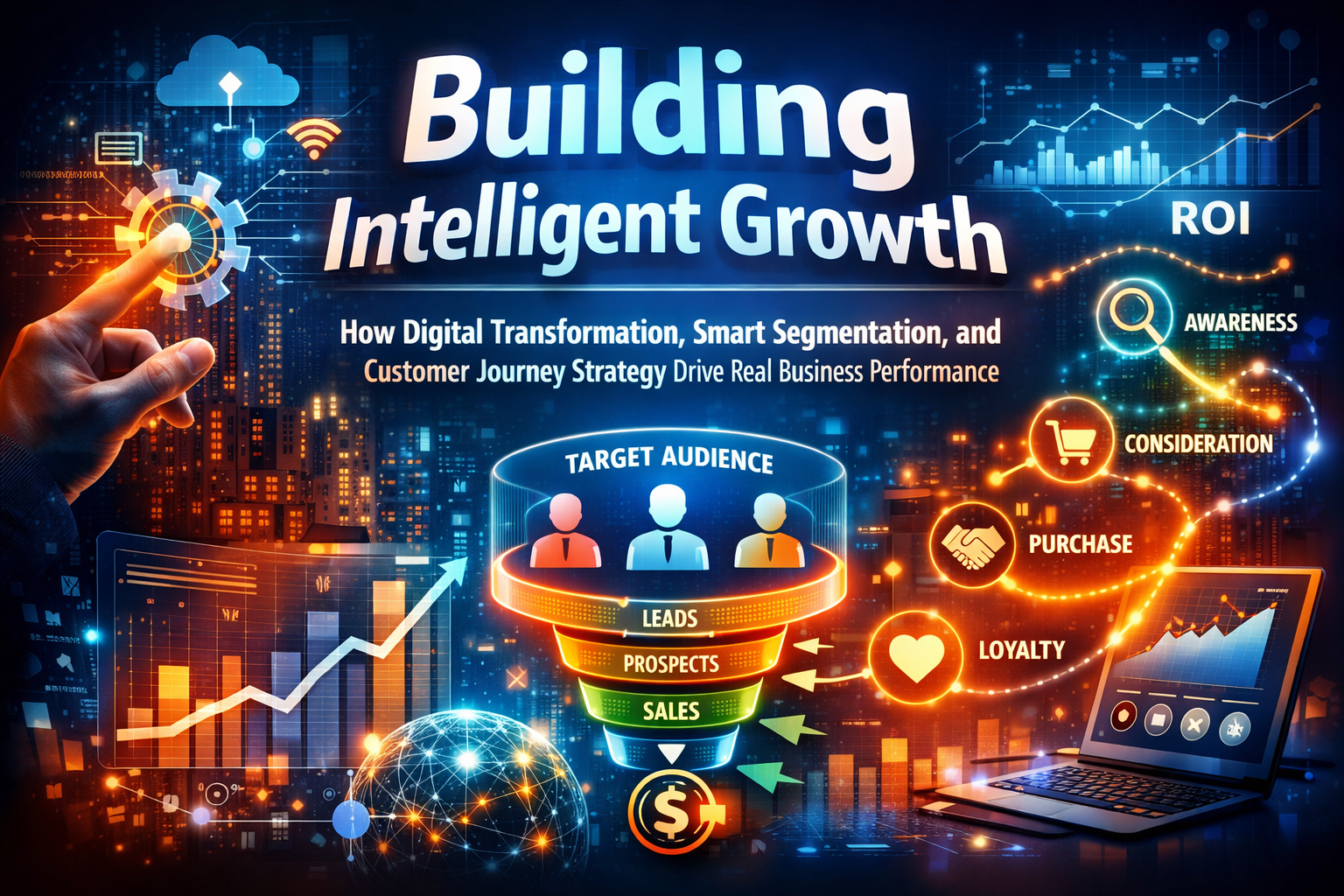
For better understanding on how these forces shape real business outcomes, I reached out to five professionals working across marketing, analytics, and growth strategies. I asked them how digital transformation, segmentation, and customer journey alignment contribute to measurable performance. Here’s what they shared:
“Strong partnerships need cultural coherence because consumers experience brands as connected systems, not isolated moments. Digital transformation provides deep behavioral insight, but without cultural alignment, those touchpoints can feel fragmented or inconsistent. When partnerships align both data and values, they create sustained relevance rather than short term visibility.”
— Dr. Wendy Guess | COIL Faculty Fellow | FIU
“In any business, or in today’s world, only a good service is not enough, its also important that how quickly you can render the service. The digital transformation helps you with that, also makes your processes error free. Customer journey is everything, strategizing it helps further strengthen your business and service. I always say, if you have command on better customer service, you are always improving.”
— Hasan Daudpota | CEO | Keys Productions
“Everything we know right now will change next month.
The key here is to abandon the mindset of keeping up with the latest trends.
Rather, it is to create them and to realize that real business performance is defined, albeit reliant on massive disruption.
Marketers need to be the ones creating the changes, not succumbing or adapting to them. Understanding the journey your customers or clients take is key, but true business performance is defined by being 50 steps ahead of everyone else, being creative, and knowing not just what social media platforms your clients or customers exist on.
Realize that TikTok has been almost banned four times, so in the end, as marketers, we need to focus our attention on thinking more long-term, perhaps even years ahead.
That is the competitive advantage I have used for several years, and I have been accurate in my predictions.”
— Ryan W. McClellan | Behavioral Consultant
“Implementing new technology is only one aspect of digital transformation, another is developing more intelligent systems that use data to guide decisions. Brands may change from basic messages to meaningful, individualized experiences by combining clever segmentation with a well thought customer journey plan. In the end, this alignment promotes quantifiable growth in revenue, retention, and long-term brand equity by strengthening connections and increasing relevance.”
— Victoria Garcia-Ruiz | Marketing Strategist Social Media and Influencer Branding | Florida International University
“Digital transformation means killing stupid delays in simple processes.
If opening a bank account takes three branch visits and five days, something is broken. Put it online, verify documents instantly, and approve in minutes. Once that friction is gone, smart segmentation helps you speak differently to a broke student and a high-value customer. Then customer journey thinking connects everything by showing where users still get confused, hesitate, or drop off. Fix those weak links, and growth stops being a guessing game. That’s how you drive real business performance.”
— Mohammad Samir | Biz Ops Analyst (AI & Data) | KAVAK
Across these insights, one theme becomes clear: intelligent growth is structural, not accidental. Digital transformation provides visibility into customer behavior, but segmentation determines where to focus, and journey strategy determines how to execute. When businesses align these three components, they reduce wasted spending, improve customer experience, and enhance lifetime value. Instead of competing on volume or price, they compete on relevance and efficiency.
For SMB owners and marketing leaders, the implication is practical. Investing in tools without strategic segmentation leads to noise. Targeting customers without mapping their journey leads to friction. And executing campaigns without data alignment leads to inconsistent performance. Sustainable growth requires integration, segmentation to messaging, connecting analytics to action, and touchpoints to measurable outcomes.
In my view, businesses that design growth intentionally succeed over the long term. Digital transformation without segmentation is scale without precision. Segmentation without journey optimization is targeting without conversion. When companies align data, clarity, and coordinated execution, performance becomes predictable rather than hopeful.
“Intelligent growth happens when businesses stop chasing visibility and start engineering value across the entire customer journey.”