

The Myth of “Everyone Is My Customer”
The most expensive mistake that every other SMB and growing brand makes is to market to everyone. Targeting broader feels efficient, but in reality, it waters down relevance. Differences in needs, behavior and value are the reasons why segmentation exists. Putting all eggs in one basket, and treating them the same, leads to wasted spending and weak engagement.
Segmentation Turns Data into Direction
At its core, segmentation helps marketers decide who to prioritize and how to speak to them. The demographics function as who your audience is, but behavioral and psychographic segmentation explain why they buy. For example, two customers with the same age and income level, but one responds to discounts while the other prefers premium service. Responding to them the same will guarantee failure, and lost customer.
SMBs Benefit the Most, But Why?
Contrary to market norms, segmentation is more dangerous for SMBs than large enterprises. Demand precision is necessary with a limited budget.] Targeting high-intent customers with segmented email campaigns can outperform a broad campaign, often at a fraction of the cost. With limited resources, relevance becomes a competitive advantage.
Application Of the Real-World
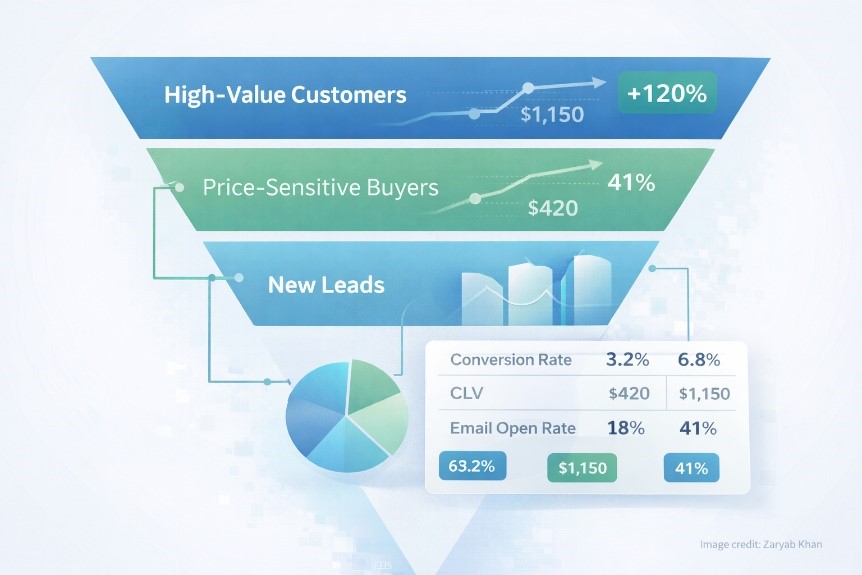
Think about a mid-sized eCommerce brand. Knowing how often customers buy and how much they spend makes it easier to be on the right track. Reward loyal customers, win back inactive ones, and guide new buyers in the right direction. This will result in higher retention, stronger lifetime value, and better ROI across channels.
The Takeaway
Segmentation is about sharpening focus rather than slicing data. Winning brands aren’t louder; they’re more relevant. In today’s crowded market, knowing exactly who you’re talking to is the main difference between growth and stagnation.